![Abhinav Gupta — Interdisciplinary Designer — [ LAB ]](http://images.squarespace-cdn.com/content/v1/69c1974850338f4e69f78956/37e4d318-8d3b-4564-8df9-1b31fcec7c2b/abhinav-lab_logo_v3.png?format=750w)
éclat[é]
designing from scale to scale
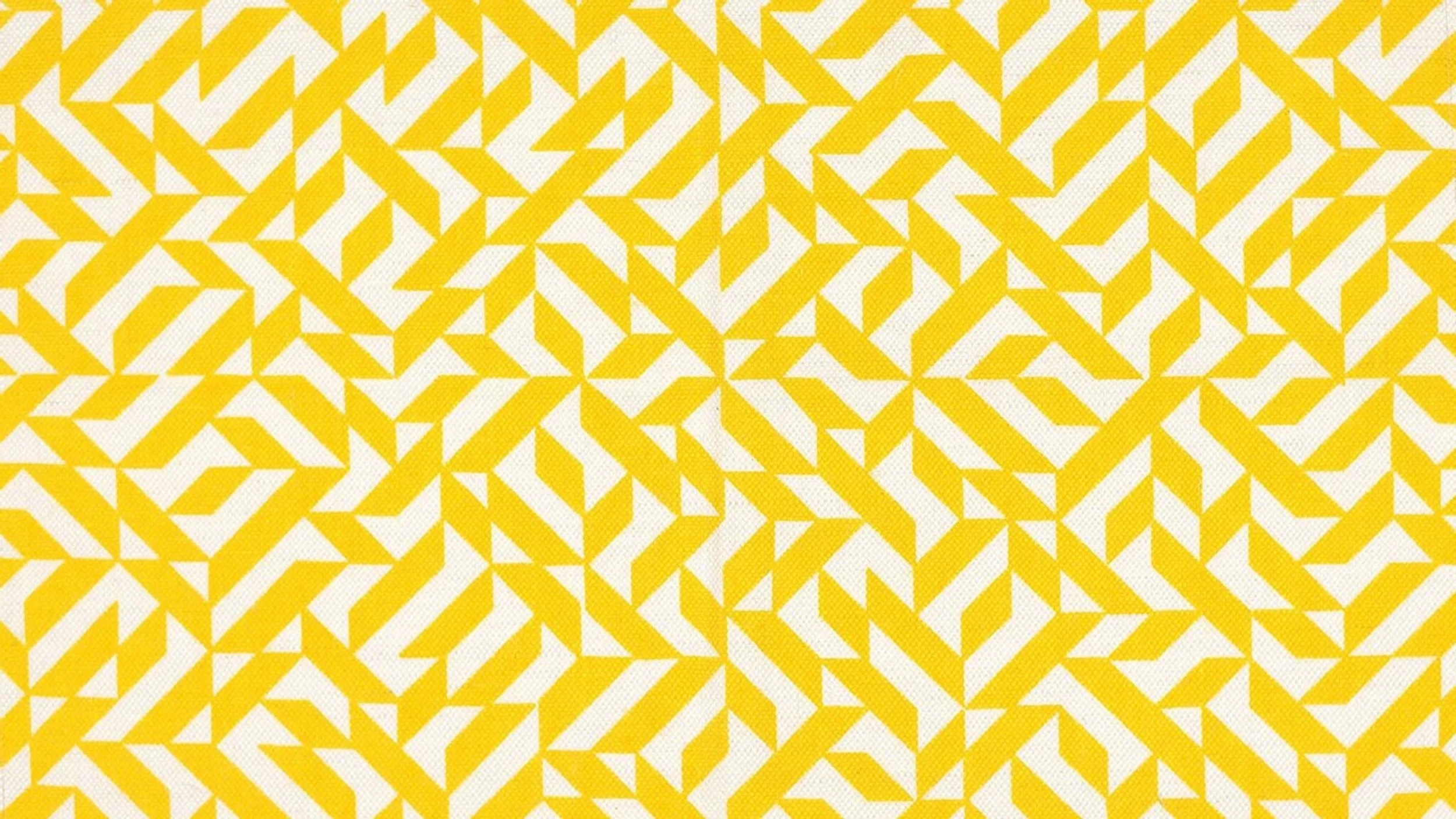
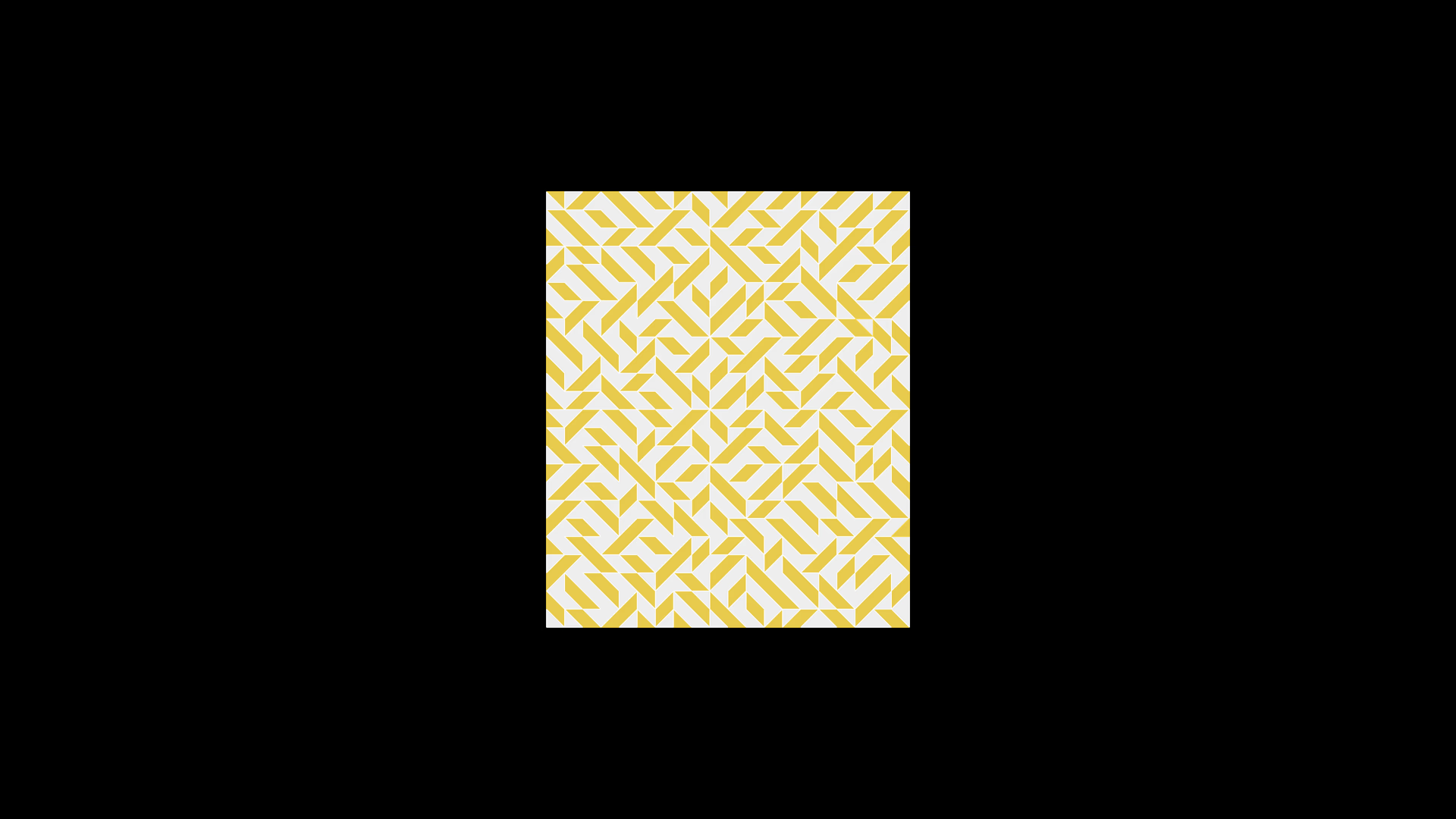
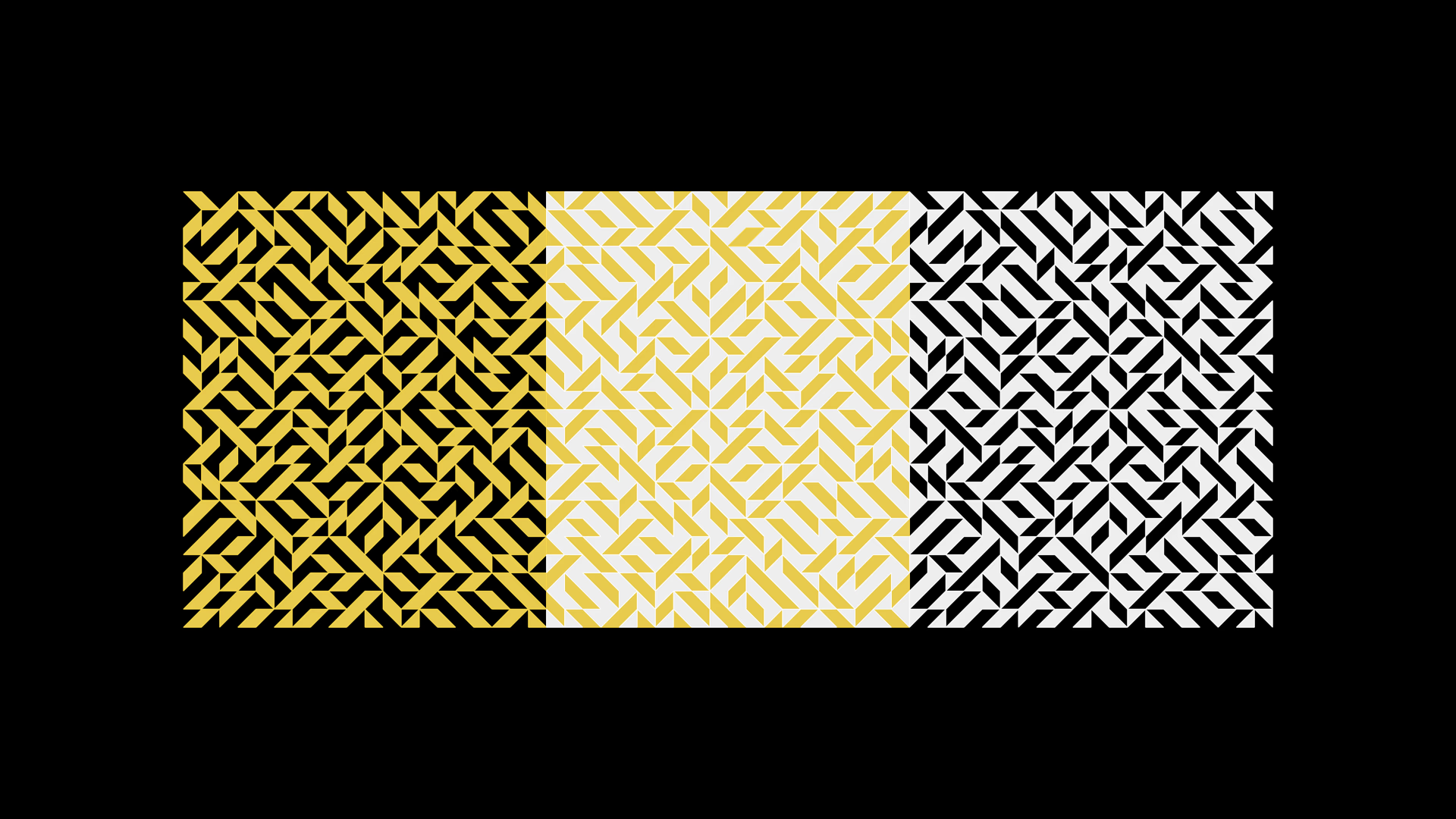
With this project, I desired to try going from something graphic to something architectural; and where better to start than with none other than the brilliant bauhaus artist Anni Albers? Working to make something new of Anni Albers' graphically iconic textile, “éclat”, is no easy feat — and designing for different functions at different scales is something that I recognized, as a designer, to be difficult to make with a work so graphically intense. Never backing away from a challenge, I committed to designing and prototyping real pieces that could work differently at different scales; here, moving from furnishing to furniture and finally even to the scale of a pavilion.
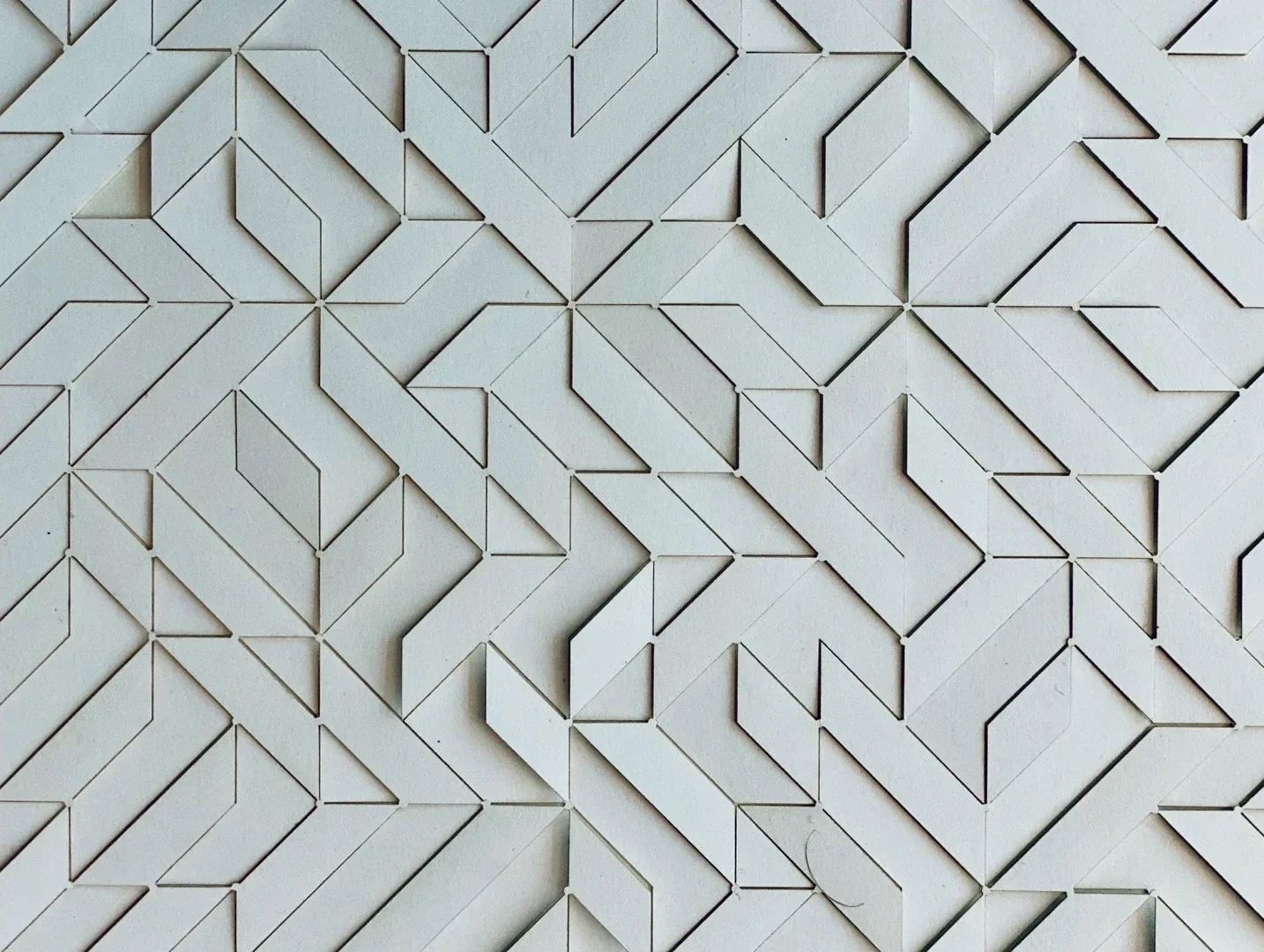
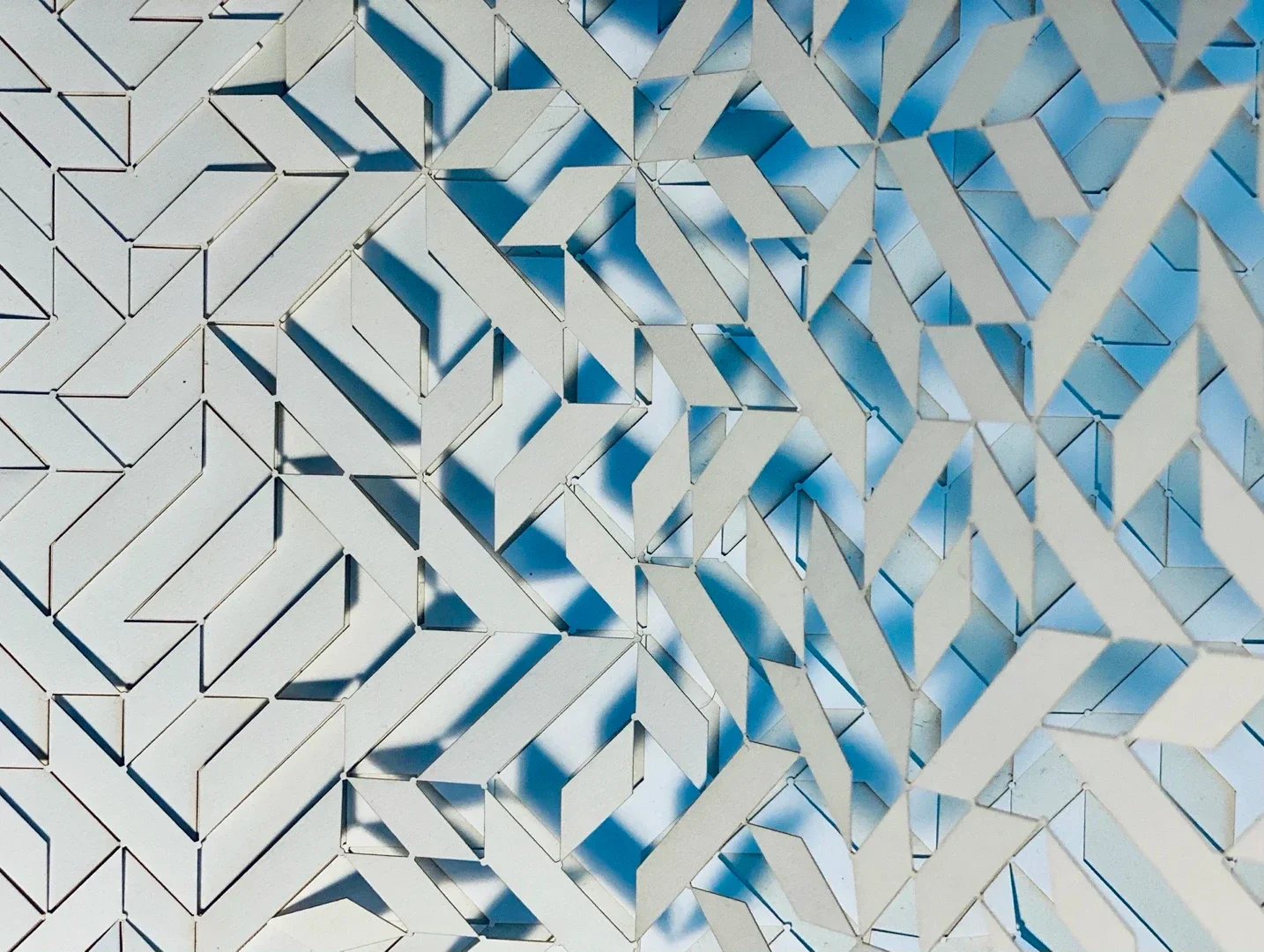
First, I started drawing/re-drawing the pattern physically and digitally. I realized that the joints of the figures, would be key to how figures could build/ build up volume. I started with joints that would allow the pattern to work as a pliable lace-like material. While the results were beautiful and, indeed, the lace-like material worked in making volume, I felt these results did not really mirror the logic of the figures/ arrangement of the figures present in the pattern.
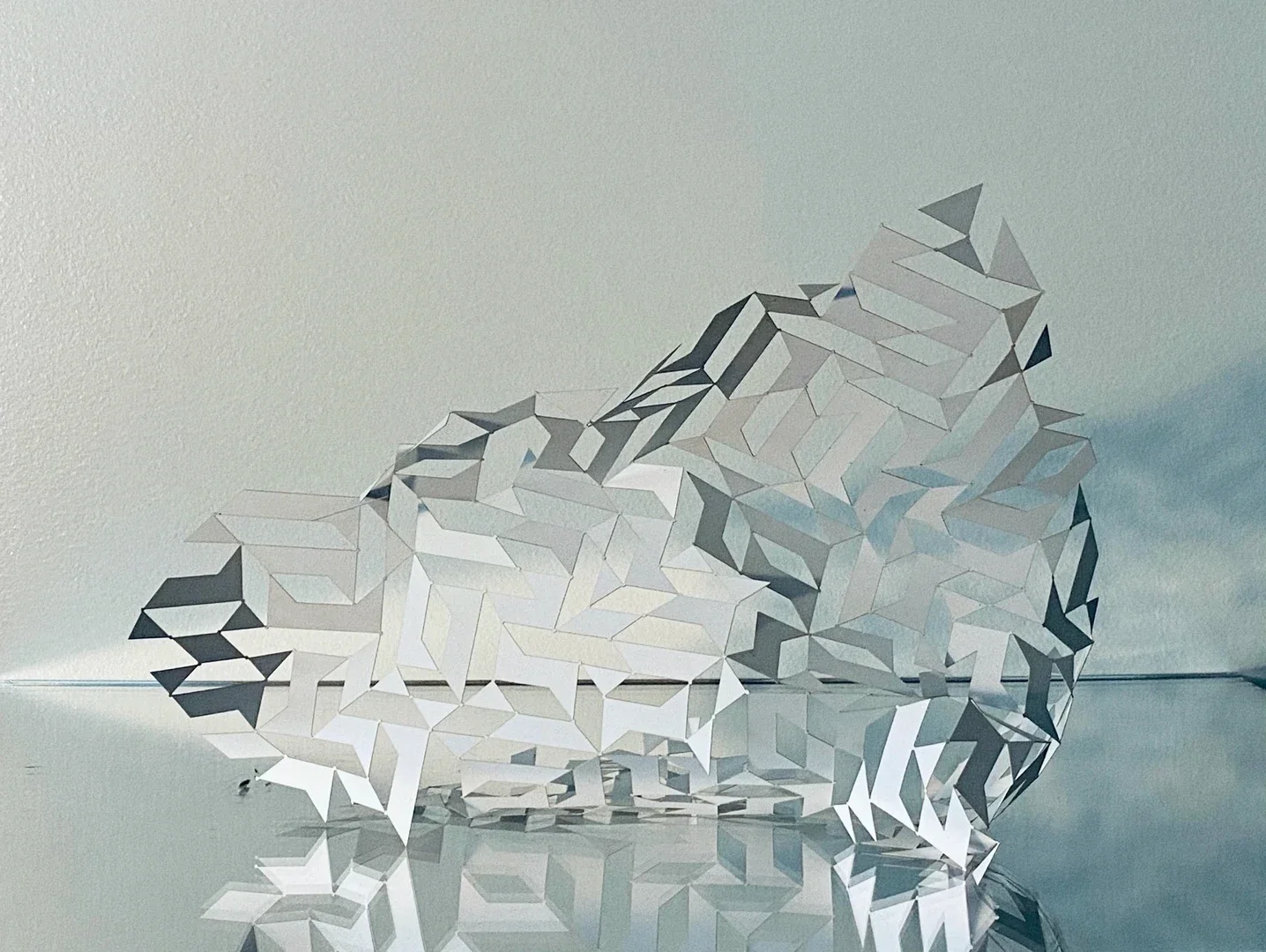
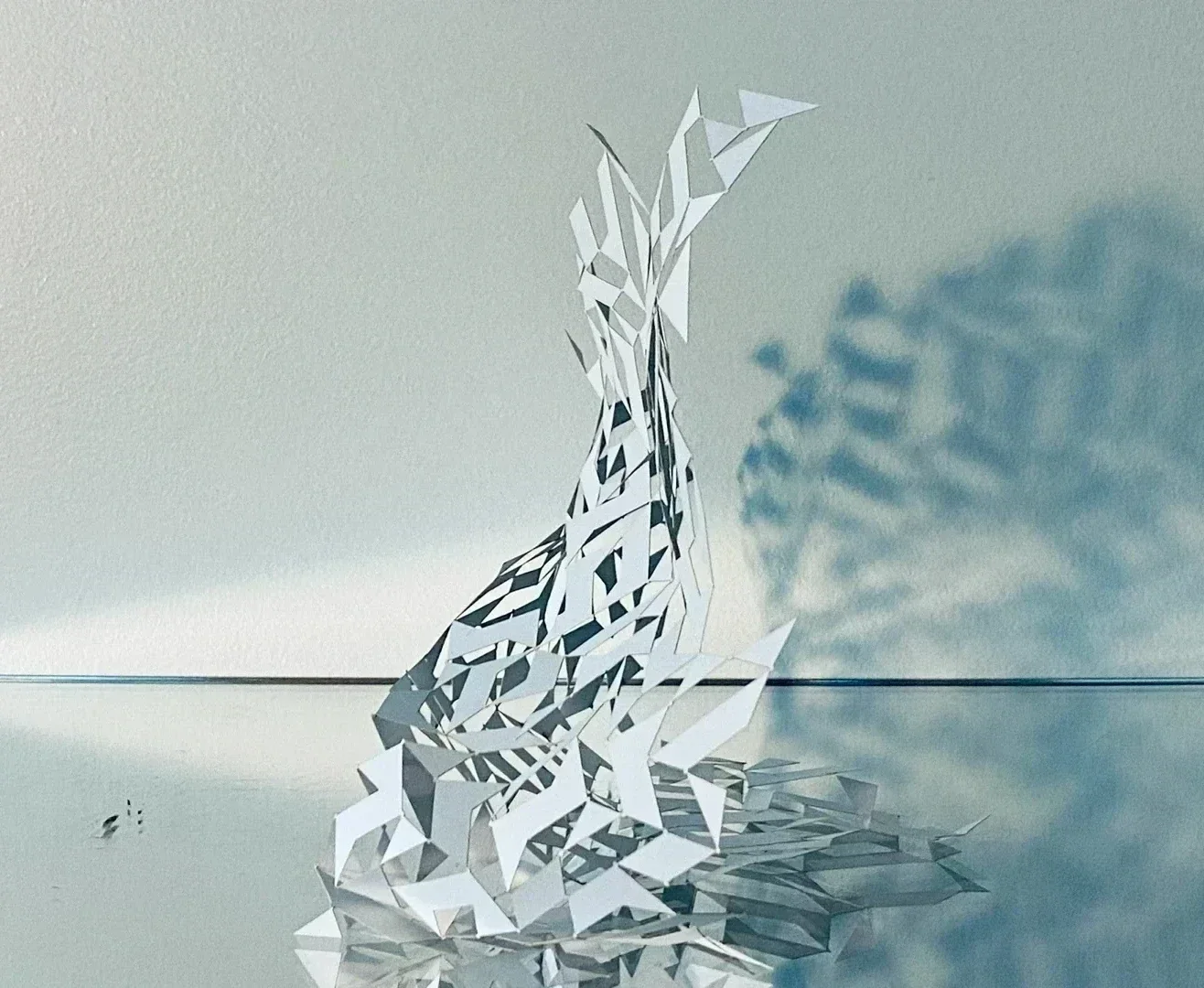
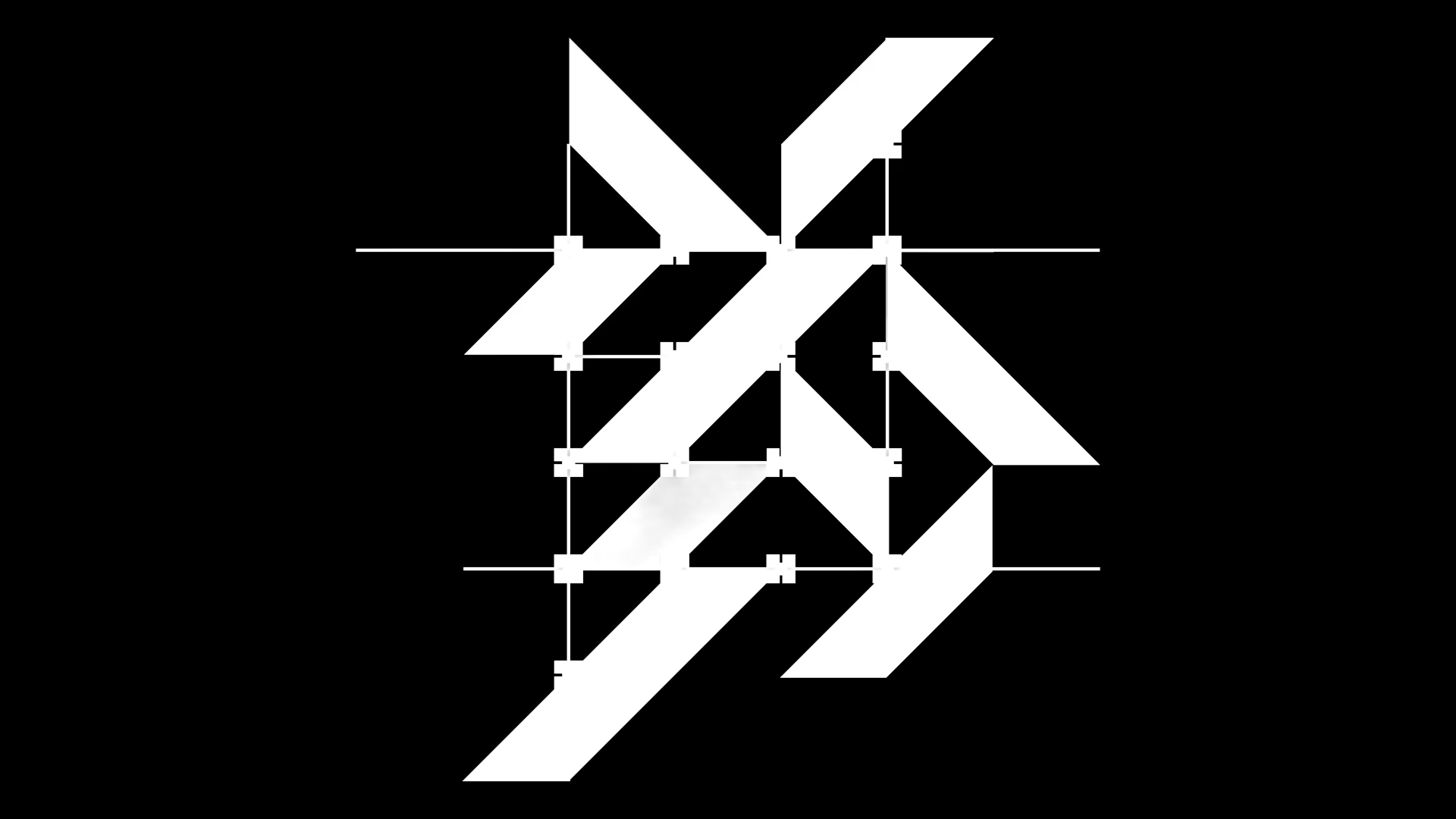
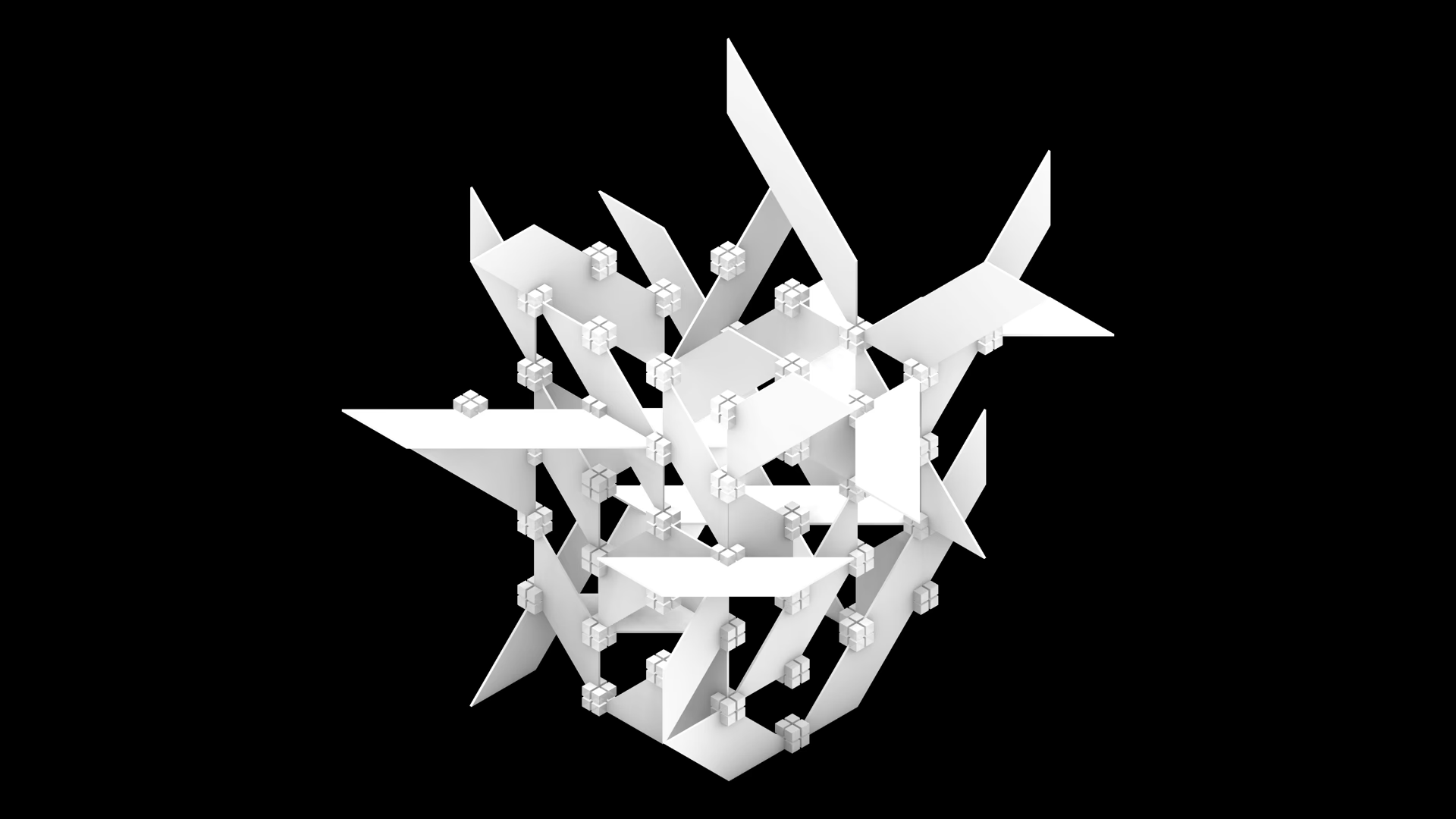
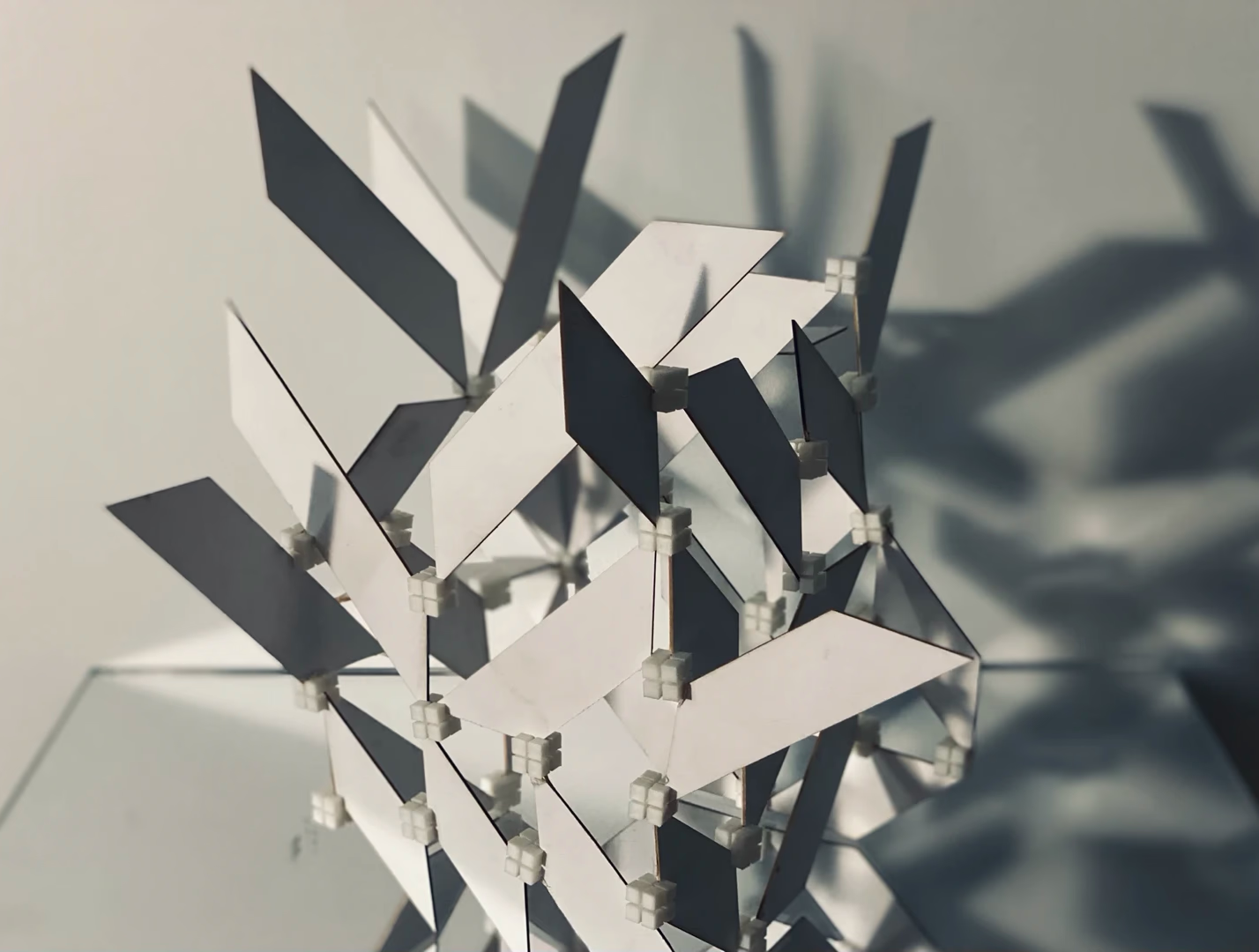
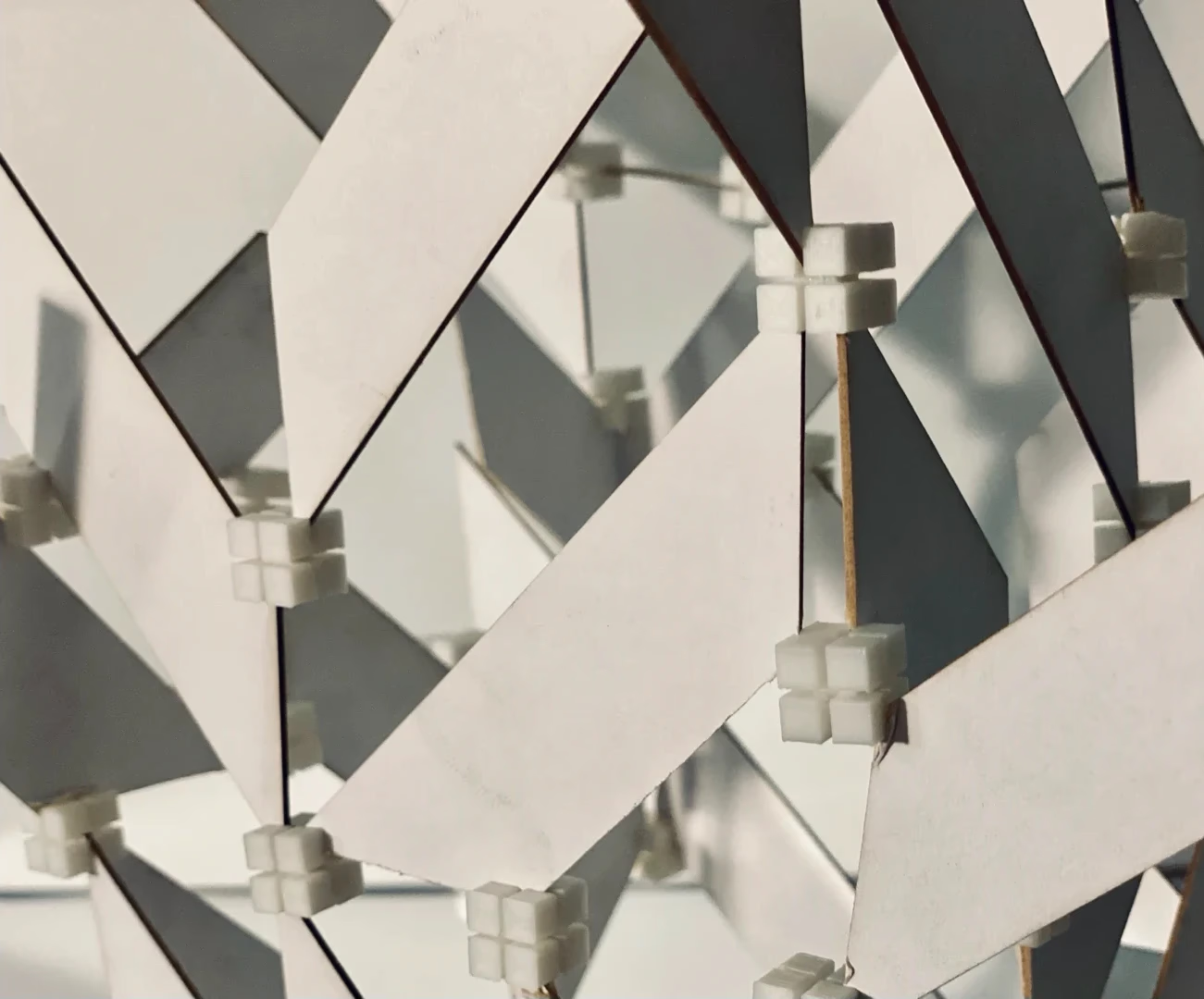
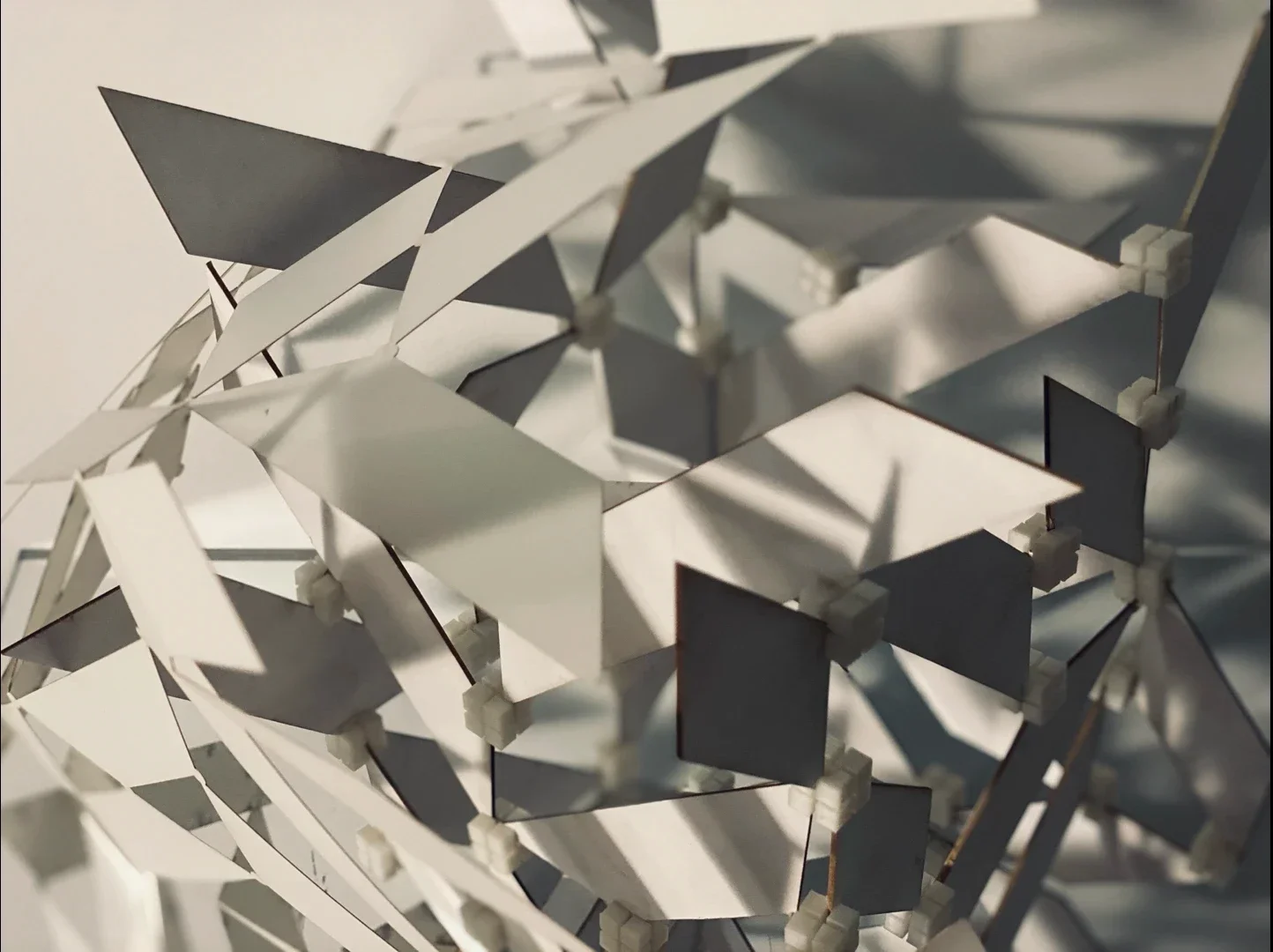
I decided to separate the figures from the pattern, bringing the logic of the pattern to life in 3D. For that, I designed and prototyped different joint typologies in 3D, and the results provided for better control on how to build/ build up volume — so much so that it delivered the vessel in a way that lets people assemble it as they would assemble a puzzle. In doing so, it also lets people play and puzzle their way to demystifying these complex patterns themselves.
Moving from furnishings to furniture, I discovered some mathematical properties about the figures in the pattern. As I perceived the figures are quadrilaterals, I worked out that these figures, if arranged for it, could tesselate — if they could tesselate, I could make furniture that could transform itself and, therefore, transform the spaces it exists in.


In testing arrangements of the figures, they could, in fact, tesselate. I preserved the figures from the original pattern; yet, made them into a geometry that lets them tesselate — the new form would transform from table to partition. I also realized that a piece could be used to 'lock' the form in both positions. I prototyped two forms at 1:1 scale, where they did transform from table to partition. Better, I used the 'lock' piece — the 'key' — as a peg to attach another unit. Now, users could attach a side table to a partition as desired. This system could allow for infinitely more configurations/reconfigurations.
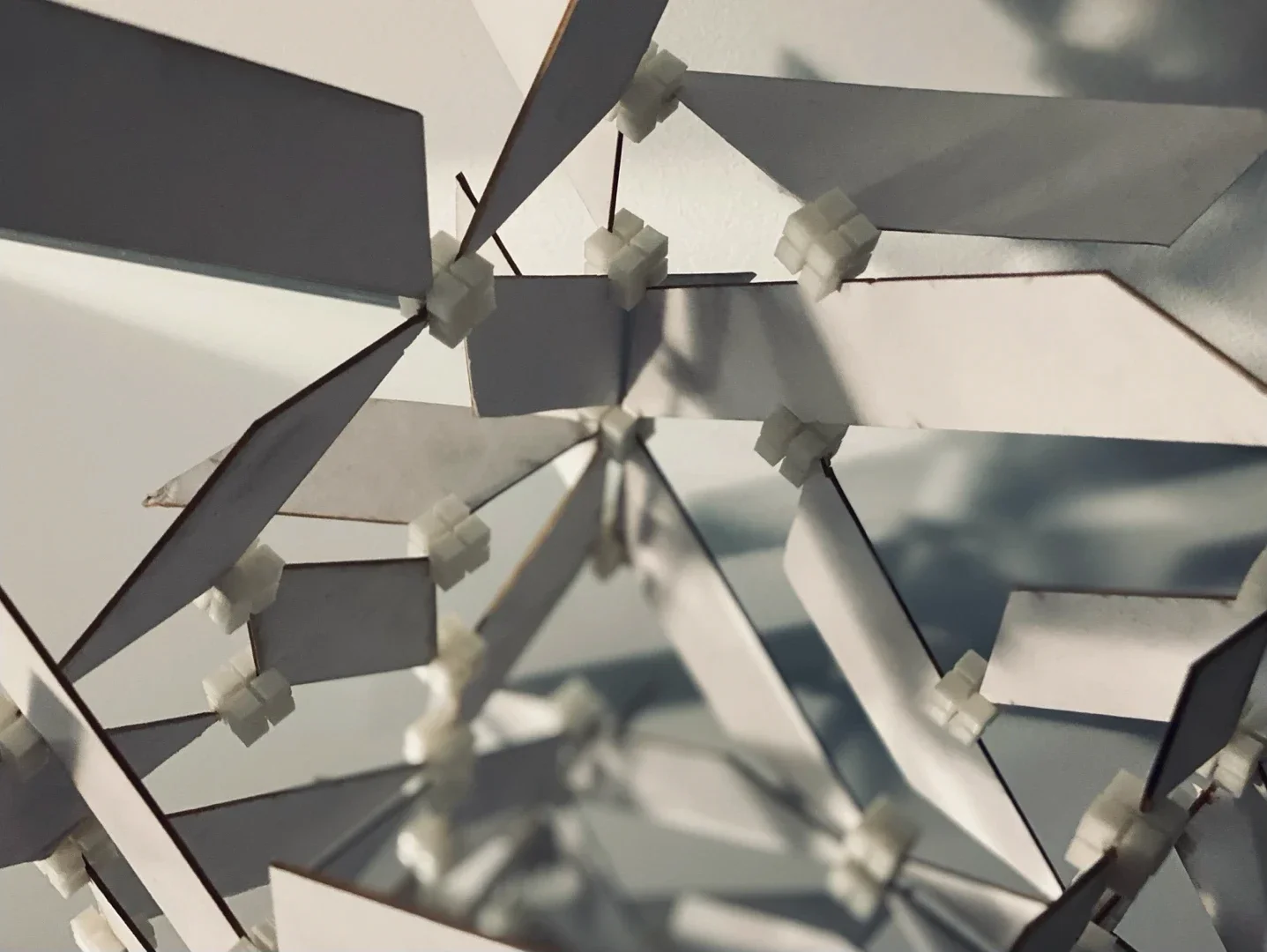
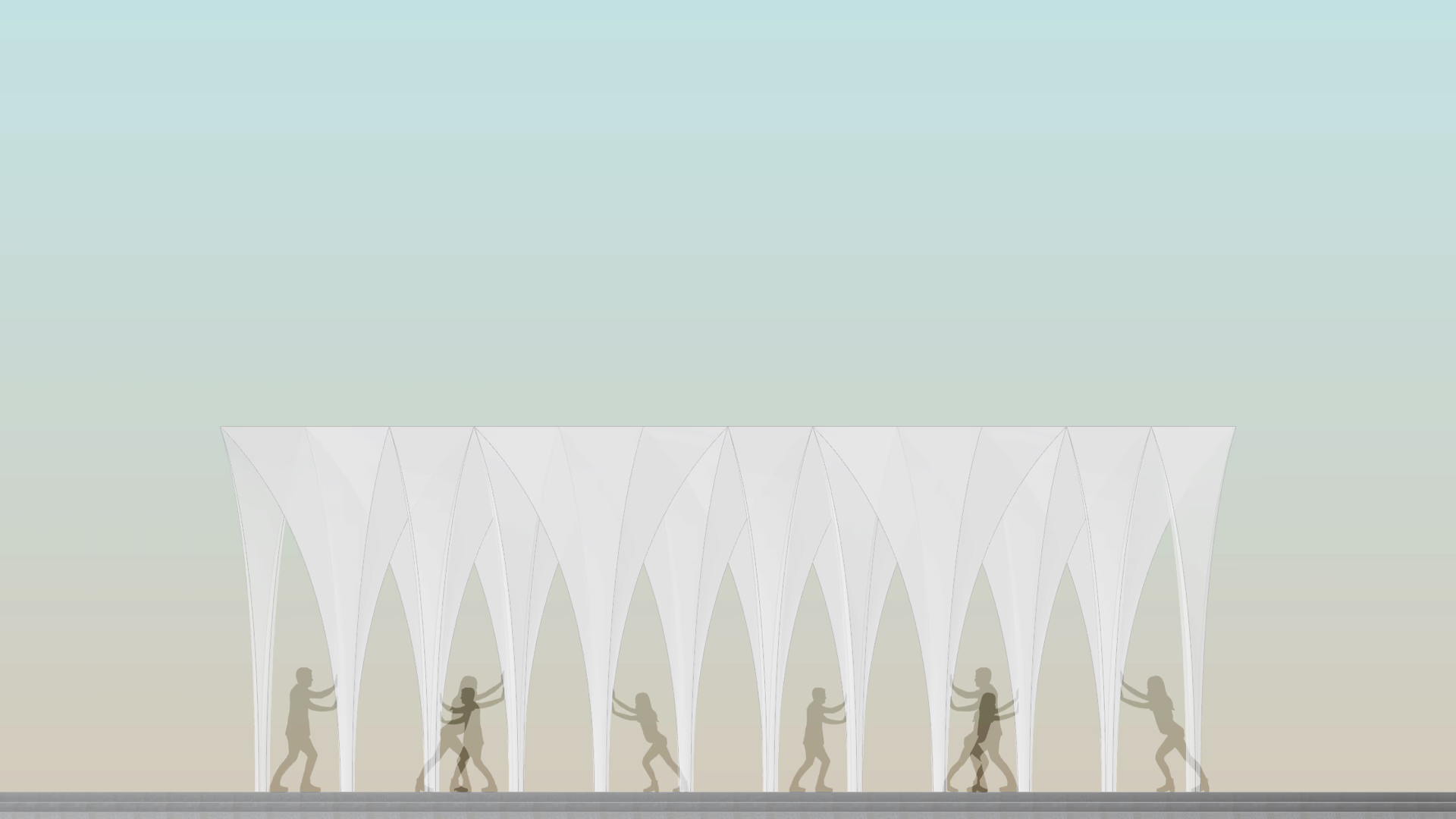


With the research making this system, I had the logic needed to go from furniture to pavilion. While the joints could work similarly, they could not be continuous without sacrificing interiority — the most critical part of making the pavilion. With that, I modified the forms again by making the 'columns' into umbrella 'columns', whereby umbrella 'canopy'/joints are defined by these familiar figures. I modelled this umbrella system with hinging at the joints similarly to the partition. The whole pavilion transforms, therefore transforming the interior space — as well as lighting and air. Inside the model, there is a visible contrast between the lighting and air conditions depending on how open/closed the pavilion is. Here, by utilizing these figures, the forms — and the whole pavilion — may be transformed by opening and closing, just as it did at a furniture scale. As architecture, it not only transforms itself and the space created inside; it also transforms the space that it exists in.